
Petrol Station Business Plan
Are you planning to establish a filling station in Nigeria but don't know where to start? Getting funding from banks or investors requires more than just a "great idea"—you need a professional, detailed, investor-ready business plan that speaks to Nigerian business realities.
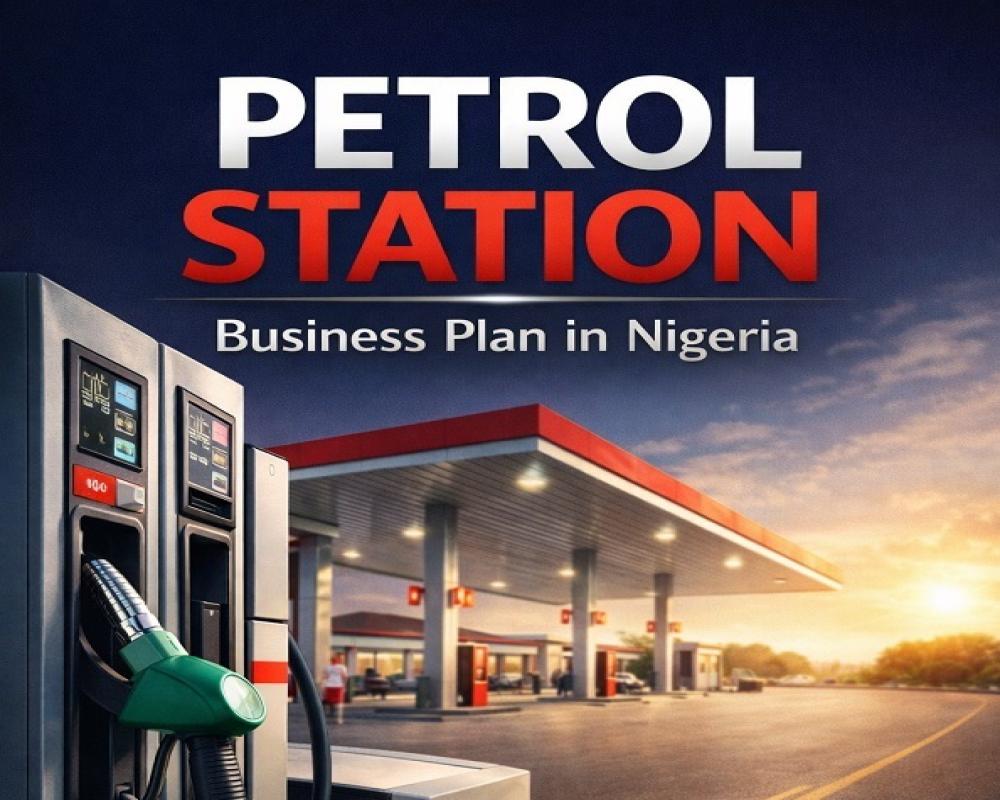
Let's be real—fuel is the lifeblood of Nigeria's economy. From the okada rider hustling in Lagos traffic to the diesel-guzzling generator keeping businesses running during those "NEPA took light" moments, everybody needs fuel. And that's exactly where our petrol station comes in.
We're setting up a modern, customer-friendly filling station that doesn't just sell fuel—we're creating a one-stop solution for motorists and the community. Think clean restrooms (yes, really clean ones!), a well-stocked convenience store, reliable pumps that don't "adjust" measurements, and attendants who actually smile and say “good morning.”
This business plan outlines how we'll invest approximately ₦150-200 million to establish a strategically located petrol station that will serve an estimated 200-300 vehicles daily in our first year, growing to 400-500 vehicles by year three. We're projecting a monthly revenue of ₦45-60 million once we hit our stride, with healthy profit margins that'll make our investors very happy.
The Nigerian fuel retail market is massive—we're talking about a country where almost every household owns a generator, where public transport runs entirely on petrol and diesel, and where fuel scarcity can turn your filling station into a goldmine overnight (though we're planning for sustainable success, not just scarcity windfalls).
With proper licensing from DPR (now NMDPRA), a prime location along a busy route, strong relationships with major marketers like NNPC, Mobil, Total, or Oando, and a customer-first approach, we're positioned to break even within 18-24 months and deliver solid returns that'll keep our investors smiling all the way to the bank.
TABLE OF CONTENTS
EXECUTIVE SUMMARY
1.0 BUSINESS OVERVIEW
- 1.1 Description of the Business
- 1.2 Vision and Mission Statement
- 1.3 Business Objectives
- 1.4 Value Proposition
- 1.5 Critical Success Factors of the Business
- 1.6 Current Status of Business
- 1.7 Description of the Business Industry
- 1.8 Contribution to Local and National Economy
2.0 MARKETING PLAN
- 2.1 Description of Products and Services
- 2.2 Opportunity
- 2.3 Equipment List
- 2.4 Pricing Strategy
- 2.5 Target Market
- 2.6 Distribution and Delivery Strategy
- 2.7 Competition
3.0 ORGANIZATIONAL AND MANAGEMENT PLAN
- 3.1 Ownership of the Business
- 3.2 Profile of the Promoters
- 3.3 Key Management Staff
- 3.3.1 Strategic Business Units
- 3.3.2 Management Support Units
- 3.4 Responsibilities and Salary Schedule of Key Management Staff
- 3.4.1 Chief Operating Officer
- 3.4.2 Admin and HR Manager
- 3.4.3 Merchandise Manager
- 3.4.4 Station Manager/Supervisor
- 3.4.5 Sales and Marketing Officer
- 3.4.6 Client Service Executive/Front Desk Officer
- 3.4.7 Accountant/Cashier
4.0 FINANCIAL PLAN
- 4.1 Financial Assumptions
- 4.2 Start-up Capital Estimation
- 4.3 Financial Projections
- 4.4 Payback Period
- 4.5 Break-even Analysis
5.0 BUSINESS RISK AND MITIGATION FACTORS
- 5.1 Business Risks
- 5.2 SWOT Analysis
6.0 CONCLUSION
APPENDICES
- Appendix A: Detailed Financial Projections (5-Year Monthly)
- Appendix B: Equipment Specifications and Quotations
- Appendix C: Site Plans and Architectural Drawings
- Appendix D: Market Research Data and Traffic Studies
- Appendix E: Regulatory Requirements Checklist
- Appendix F: Management CVs and References
- Appendix G: Letters of Intent from Suppliers
- Appendix H: Environmental Impact Assessment Summary
- Appendix I: Insurance Coverage Details
- Appendix J: Sample Customer Contracts
BENEFITS OF THIS BUSINESS PLAN
Why This Business Plan Works for Nigerian Entrepreneurs
1. INVESTOR-READY DOCUMENTATION
- Comprehensive 70-100 page professional document that banks and investors actually want to see
- Realistic financial projections based on current Nigerian market realities (not inflated fantasies)
- Detailed risk analysis showing you've thought through the challenges
- Credible 18-24 month payback period that makes financial sense
2. SPEAKS THE NIGERIAN BUSINESS LANGUAGE
- Written in conversational, relatable tone that Nigerians actually use
- Addresses real Nigerian challenges: fuel scarcity, NEPA issues, generator culture, "pump fraud," supplier credit challenges
- Uses familiar examples: danfo drivers, okada riders, keke operators, "I-better-pass-my-neighbor" generators
- Pricing in Naira with realistic Nigerian costs (not dollar conversions that don't make sense)
3. PRACTICAL, NOT THEORETICAL
- Real strategies for dealing with DPR/NMDPRA licensing (not generic regulatory talk)
- Actual equipment costs from Nigerian suppliers (Tatsuno, Tokheim pumps at real prices)
- Genuine marketing approaches (loyalty cards, SMS alerts, community engagement that works here)
- Honest discussion of "local challenges" like theft prevention, staff fraud, cash handling
4. STEP-BY-STEP IMPLEMENTATION ROADMAP
- Month-by-month timeline from funding to first fuel sale
- Clear milestones: When to apply for licenses, when to order equipment, when to recruit staff
- Contingency planning for Nigerian realities (supply disruptions, regulatory delays, "settling" costs)
- Detailed equipment list with local suppliers and hire-vs-buy analysis
5. COMPLETE FINANCIAL MODELING
- Realistic revenue projections: ₦45-60M monthly at full capacity (not exaggerated figures)
- Honest cost breakdown: Staff (₦45.5M annually), fuel margins (₦12-18/litre), overhead
- Cash flow management strategy (critical for fuel business working capital needs)
- Multiple scenarios: Base case, optimistic, conservative (so you're prepared)
6. RISK MANAGEMENT THAT'S ACTUALLY USEFUL
- Addresses real threats: Fuel supply disruptions, Fall Armyworm (for farming), staff theft, price volatility
- Concrete mitigation strategies (not vague "we'll manage" statements)
- SWOT analysis that's honest about weaknesses (builds credibility)
- Insurance and contingency planning
7. COMPETITIVE ANALYSIS GROUNDED IN REALITY
- Compares you vs. major marketers (NNPC, Mobil, Total) vs. independent stations vs. black market
- Your differentiation strategy that actually works in Nigerian context
- Pricing strategy that balances competitiveness with profitability
- Customer acquisition tactics for danfo drivers, corporate fleets, neighborhood residents
8. OPERATIONAL EXCELLENCE FRAMEWORK
- Staff structure with actual Nigerian salary ranges (COO ₦500k/month, pump attendants ₦60k/month)
- Quality control procedures (pump calibration, fuel testing, customer complaint handling)
- Safety protocols (fire prevention, environmental compliance, security)
- Technology integration (POS systems, CCTV, inventory management)
9. ADAPTABLE TEMPLATE STRUCTURE
- While written for petrol station, the structure works for ANY Nigerian business
- Clear section organization that investors/banks recognize
- Professional formatting that looks serious (not a "weekend Microsoft Word project")
- Can be customized for different scales (100 hectares farm, 50-bed hotel, logistics company)
10. CREDIBILITY BUILDERS
- Demonstrates you've done proper research (traffic studies, competitor analysis, supplier quotes)
- Shows understanding of industry (mentions NMDPRA regulations, AFEX commodity exchange, CBN Anchor Borrowers Program)
- Professional language throughout (no typos, grammatical errors, or informal shortcuts)
- Realistic, not overly optimistic (builds trust with sophisticated investors)
0 Comments