Facebook Monetization Mistakes Nigerians Must Avoid (and How to Fix Them)
Avoid common Facebook monetization mistakes in Nigeria. Learn why monetization gets rejected or disabled and how to fix it step by step.
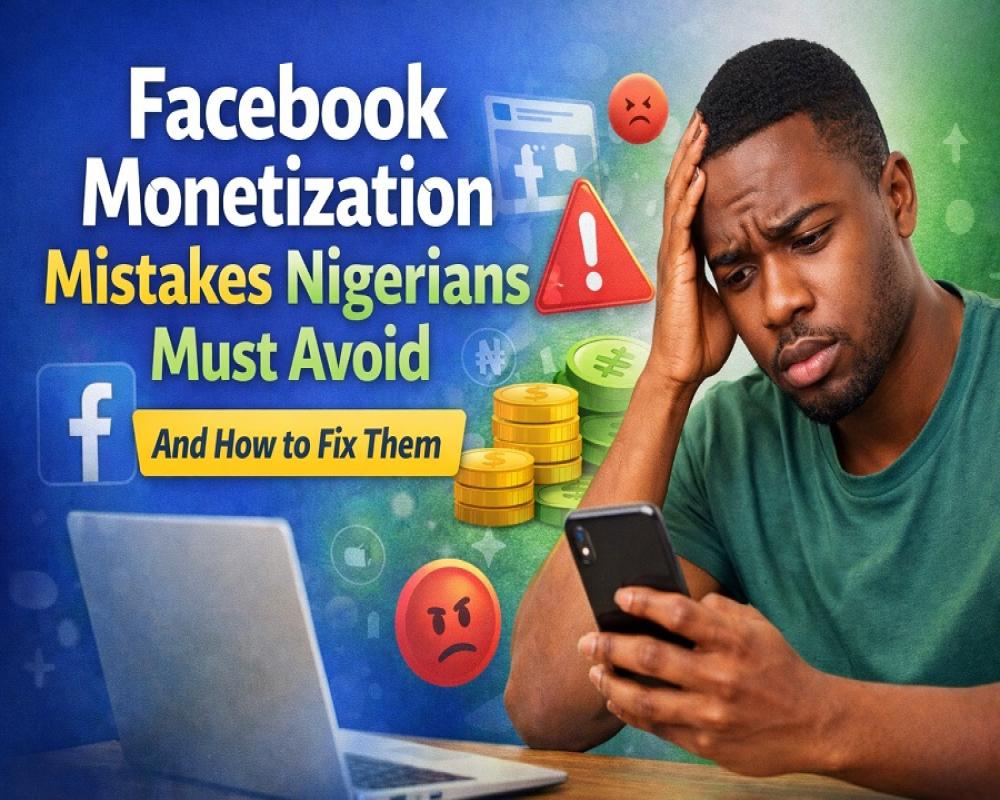
Many Nigerian creators work hard to build their Facebook pages. They post videos every day. They gain followers. They reach the minimum requirements. Then they apply for monetization and wait excitedly for approval. But instead of approval, they receive a rejection message. Their hearts sink. All that work feels wasted.
If this sounds like your story, you are not alone. Thousands of Nigerians face the same problem. The good news is that most Facebook monetization mistakes Nigerians must avoid are actually simple to fix once you know what they are. This guide will show you exactly what mistakes Nigerian creators make, why Facebook rejects their applications, and most importantly, how to fix these problems so you can finally start earning money from your content.
Whether your monetization was rejected, denied, or disabled after approval, this article will help you understand what went wrong and give you clear steps to solve the problem. Let us begin by looking at the most common mistakes.
Why Nigerian Creators Struggle With Facebook Monetization
Before we talk about specific mistakes, let me explain why so many Nigerians struggle with getting approved for Facebook monetization in the first place.
Facebook has very strict rules about who can earn money on their platform. These rules exist to protect advertisers who pay Facebook to show ads. Advertisers do not want their ads appearing on videos that contain stolen content, violence, misleading information, or anything that could damage their brand reputation. So Facebook carefully checks every page that applies for monetization.
Many Nigerian creators do not fully understand these rules. They think that getting ten thousand followers and six hundred thousand minutes of watch time automatically means approval. But those numbers are just the beginning. Facebook also examines the quality and originality of your content, checks if you follow their community guidelines, and verifies that you have not violated any copyright rules.
Another reason Nigerians struggle is because some popular content strategies that work for gaining followers quickly actually violate Facebook's monetization policies. For example, reposting funny videos from WhatsApp or TikTok might get you followers fast, but Facebook will reject your monetization application immediately because that content is not original.
Understanding these challenges is the first step to overcoming them. Now let me show you the specific mistakes you must avoid.
Common Facebook Monetization Mistakes Nigerian Creators Make
Mistake 1: Using Reused or Unoriginal Content
This is the number one reason for Facebook monetization rejected Nigeria applications. Many creators build their pages by downloading videos from other platforms and reposting them. They find funny skits on Instagram, download them, and post them on their Facebook page. They see viral videos on TikTok, save them, and share them as their own content.
This strategy might help you gain followers quickly because people enjoy these videos. But Facebook's technology can detect when you post content that originally came from somewhere else. Even if you remove watermarks or edit the video slightly, Facebook's system still recognizes it as unoriginal content.
Some creators think they are being smart by combining clips from different sources to create compilation videos. For example, putting together the "top ten funniest moments" by collecting clips from various creators. But this is still unoriginal content. You did not create those moments. You just collected them.
Facebook wants to pay creators who make original content. When you apply for monetization with a page full of reposted videos, Facebook sees that you are not actually creating anything new. They reject your application because they cannot pay you for content that belongs to other people.
Mistake 2: Violating Copyright and Music Rules
Copyright violations are extremely common among Nigerian creators. Many people do not fully understand what copyright means or why it matters.
The most frequent copyright mistake involves music. You create a video talking about something or showing something interesting. Then you add a popular song in the background because it makes the video more enjoyable. The problem is that popular songs are copyrighted. The artist and record label own the rights to that music. Using their music without permission is copyright infringement.
Some creators use movie clips, TV show scenes, or news footage in their videos without permission. Others use images or graphics they found on Google without checking if they have the right to use them. All of these actions can result in copyright strikes on your account.
When you have copyright strikes, Facebook will not approve your monetization application. Even one copyright strike can prevent approval. If you get multiple copyright strikes, Facebook might disable your entire page permanently.
Many Nigerian creators do not realize there is a problem until they apply for monetization and get rejected with a message about copyright violations. By then, the damage is already done.
Mistake 3: Low Watch Time and Poor Engagement
Some creators meet the basic requirements of ten thousand followers and six hundred thousand minutes of watch time, but they achieved these numbers through questionable methods.
For example, some people buy fake followers or use engagement groups where everyone agrees to watch each other's videos. While this might help you reach the numerical requirements, Facebook's system can detect fake engagement patterns. If your page suddenly gained thousands of followers overnight, or if most of your watch time comes from a small group of accounts that watch everything you post, Facebook becomes suspicious.
Even with legitimate followers, low engagement rates signal problems to Facebook. If you have ten thousand followers but your videos only get fifty views each, Facebook questions whether your followers are real and engaged. Pages with healthy engagement typically get views that are at least five to ten percent of their follower count.
Another issue is watch time quality. Some creators make very long videos hoping to accumulate watch time quickly. But if people click away after watching only thirty seconds of a twenty-minute video, that signals to Facebook that your content is not engaging. Facebook prefers pages where people watch videos completely or at least watch most of the video.
Mistake 4: Posting Inappropriate or Risky Content
Some Nigerian creators post content that violates Facebook's community standards without realizing it. These violations can range from obvious to subtle.
Obvious violations include posting violent content, sexual content, hate speech, or content that promotes dangerous activities. Most people understand these are not allowed. But there are also less obvious violations that many Nigerians accidentally make.
For example, some creators post videos about traditional medicine or herbal treatments making specific health claims. Facebook considers this medical misinformation if you cannot back up these claims with scientific evidence. Other creators post videos about betting strategies or gambling tips, which Facebook restricts heavily.
Clickbait and misleading content is another problem. When your video thumbnail shows something shocking but the actual video is about something completely different, Facebook calls this misleading content. Many creators use this strategy to get clicks, not realizing it violates monetization policies.
Some Nigerian creators also post content about sensitive topics like politics or religion in ways that Facebook considers divisive or inflammatory. While you can discuss these topics, you must do so carefully and respectfully without attacking people or spreading unverified information.
Mistake 5: Not Meeting Page and Profile Requirements Properly
Beyond the basic follower and watch time requirements, Facebook has other page requirements that many creators overlook.
Your page must be in good standing, which means no recent violations or warnings. Some creators have had their page restricted temporarily for spam or other violations months ago. Even though the restriction is lifted, the violation history remains and can affect monetization approval.
Your personal Facebook profile must also be in good standing. Facebook links your page to your personal account. If your personal account has violations, suspicious activity, or even just looks fake or incomplete, this can affect your page's monetization application.
The name on your Facebook account must match your real legal name and must match your payment information exactly. Some people use stage names or business names on their account, which creates problems when Facebook tries to verify identity and process payments.
Not completing the verification process is another mistake. When Facebook asks you to verify your identity by uploading government ID, some creators ignore this request or submit unclear photos. Without proper verification, your monetization application cannot be approved.
How to Fix Facebook Monetization Issues in Nigeria
Now that you know the common mistakes, let me show you exactly how to fix these problems. These solutions work whether your application was rejected or whether you want to avoid rejection in the first place.
Solution 1: Audit Your Content for Originality
Go through every video on your page carefully. Be completely honest with yourself about which videos are truly original content you created and which videos you got from somewhere else.
Delete any video that is not completely original. Yes, this might mean deleting videos that got many views and helped you gain followers. But keeping unoriginal content on your page guarantees rejection. It is better to remove these videos now and start fresh with original content.
After deleting unoriginal content, create a plan for making only original videos going forward. Original content means you appear in the video, you speak in the video, you film the video yourself, or you create animation or graphics yourself. Even simple videos of you talking to the camera about topics you understand are better than reposting someone else's viral content.
If you want to discuss trending topics or react to viral videos, film yourself reacting and giving your own commentary. Do not just show the viral video. Show yourself on camera sharing your thoughts about it. This transforms it from stolen content into original commentary.
Wait at least thirty days after cleaning up your page before applying for monetization again. This gives Facebook's system time to re-evaluate your page based on your new original content.
Solution 2: Use Copyright-Free Music and Graphics
Never use popular commercial songs in your videos unless you know for certain that Facebook allows them for monetization. The safest approach is to use only music from Facebook's Sound Collection.
To access Facebook's Sound Collection, go to Creator Studio on your computer or Professional Dashboard on your phone. Look for the "Sound Collection" option in the menu. Here you will find thousands of music tracks and sound effects that Facebook has licensed for creators to use freely. Browse through categories, preview songs, and download the ones you like. Use only these songs in your videos.
If you want to use music from outside Facebook, search for "royalty-free music" or "copyright-free music for YouTube and Facebook." Websites like Pixabay, Uppbeat, and Incompetech offer free music for creators. Always read the license terms to make sure commercial use is allowed.
For images and graphics, use your own photos or create your own graphics. If you need stock photos, use sites like Unsplash or Pexels that offer free images for commercial use. Always check the license.
If you already have copyright strikes on your account, you need to resolve them before applying for monetization. Go to Creator Studio and check the "Monetization" section for any copyright notices. Follow Facebook's instructions to resolve each strike. This might involve removing the offending video, acknowledging the violation, or waiting for the strike to expire after ninety days.
Solution 3: Improve Video Length and Engagement
Focus on creating videos that keep people watching. The ideal video length for Facebook monetization is between three and ten minutes. This is long enough to place multiple ads but short enough that people watch completely.
Start your videos with something immediately interesting in the first three seconds. Do not waste time with long introductions or unnecessary greetings. Jump straight into the topic that people came to see.
Structure your videos to maintain interest throughout. If you are teaching something, break it into clear steps. If you are telling a story, build anticipation. If you are discussing a topic, make your most interesting points early to hook viewers.
Ask questions to your audience during the video to create mental engagement. When you ask "Have you ever experienced this?" or "What do you think about this?", viewers start thinking and engaging mentally even if they do not comment.
End your videos with a clear conclusion rather than just stopping abruptly. Summarize what you discussed or give a final thought. This leaves viewers satisfied.
Encourage comments by asking viewers to share their opinions or experiences in the comments section. Respond to comments within the first few hours after posting to boost engagement signals.
Post at consistent times when your audience is most active. Check your insights in Creator Studio to see when your followers are online. Posting when they are active gives you immediate views and engagement, which tells Facebook's algorithm your video is good.
Solution 4: Ensure Your Page and Account Meet All Requirements
Verify that your page has genuinely reached ten thousand followers and six hundred thousand minutes of watch time through legitimate means. If you bought followers or used suspicious growth tactics, your best option is to start fresh with a new page and grow it properly.
Complete your page information fully. Add a clear profile picture, cover photo, page description, and contact information. Pages that look professional and complete are more likely to be approved.
Make sure your personal Facebook account is in good standing with no active restrictions or violations. Use your real name on your personal account exactly as it appears on your government ID and bank account.
When Facebook asks you to verify your identity, do it immediately. Take clear photos of your government-issued ID in good lighting. Make sure all text is readable. Submit the verification within the requested timeframe.
Check that all your page settings comply with monetization requirements. Your page should not have any active warnings, should not be recently created (at least sixty days old is better), and should show consistent posting activity over time.
Solution 5: Appeal and Resolve Monetization Blocks
If your monetization was rejected or disabled, you have the right to appeal the decision. Go to Creator Studio and find the "Monetization" section. Look for information about why your application was rejected. Facebook usually provides some explanation.
Click on the appeal or request review option if available. In your appeal, be professional and polite. Briefly explain what steps you have taken to fix the issues Facebook identified. Do not be defensive or angry. Just state the facts clearly.
For example, you might write: "I have reviewed Facebook's monetization policies carefully. I have removed all videos that were not completely original content. All videos on my page now are created by me personally. I have also removed videos with copyrighted music and now use only music from Facebook's Sound Collection. I respectfully request that you review my page again for monetization eligibility."
Appeals can take several weeks to be reviewed. Be patient. While waiting, continue posting high-quality original content to demonstrate that you are a serious creator.
If your appeal is denied again, ask for specific information about what is still wrong. Sometimes Facebook provides more detailed feedback after an appeal. Use that feedback to make further improvements, then appeal again after at least thirty days.
Facebook Payment Problems Nigeria: Common Issues and Solutions
Even after getting approved for monetization, some Nigerian creators face problems receiving their payments. Let me explain the most common Facebook payment problems Nigeria and how to solve them.
Issue 1: Payment Threshold Not Reached
Facebook only sends payment when you have earned at least one hundred US dollars. Many Nigerian creators do not realize this and wonder why they have not received money even though they have been monetized for a month or two.
Check your earnings in Creator Studio. If you have earned less than one hundred dollars, Facebook holds that money until you reach the threshold. Your earnings accumulate month after month until you reach one hundred dollars, then Facebook processes the payment.
There is nothing you can do to change this threshold. You simply need to create more engaging content that generates more views and watch time so you earn faster.
Issue 2: Payment Information Not Set Up Correctly
This is a very common problem. Your bank account name must match your Facebook account name exactly. If there is any mismatch, Facebook cannot send the payment.
Go to Creator Studio and check your payment settings. Make sure your bank account details are entered correctly with no typos. The account holder name should match your Facebook name and your government ID precisely including middle names.
Some Nigerian creators try to use someone else's bank account because they do not have their own account. This will not work. Facebook requires the payment account to be in your name for security and tax purposes.
If you have trouble with bank payments, consider setting up a Payoneer account. Payoneer is an international payment service that works well in Nigeria. Facebook can send payments to your Payoneer account, then you can withdraw to your Nigerian bank account from Payoneer. Many Nigerian creators prefer this method because it is more reliable.
Issue 3: Payment Delays
Facebook typically processes payments around the twenty-first of each month for the previous month's earnings. However, the money might take several additional days to appear in your Nigerian bank account due to international transfer processing times.
If you have not received payment by the end of the month following your earning month, check your email for any messages from Facebook about payment issues. Also check your payment settings in Creator Studio for any error messages.
Sometimes Nigerian banks hold international transfers for additional verification. Contact your bank to ask if they have received a transfer from Facebook and if any verification is needed from your side.
If more than forty-five days have passed since your payment should have been sent, you can report the issue to Facebook through the support section in Creator Studio.
Issue 4: Tax Forms and Documentation
Facebook may ask you to complete tax documentation before they can send payments. For Nigerian creators, this usually involves completing a W-8BEN form which declares that you are not a US taxpayer.
When Facebook requests this form, complete it promptly. You can usually fill it out digitally within Facebook's payment settings. Failing to complete required tax forms will hold up your payments indefinitely.
Avoiding Account or Page Suspension During Monetization
Getting monetization approved is just the beginning. You must maintain that monetization by continuing to follow all of Facebook's rules. Here is how to avoid problems.
Maintain Consistent Posting Patterns
Sudden changes in posting frequency can trigger Facebook's automated monitoring systems. If you normally post twice a week but suddenly start posting ten times a day, Facebook might flag your account for suspicious activity.
Keep your posting schedule consistent. If you have been posting three times a week, continue that pattern. Gradual increases are fine, but avoid dramatic changes.
Follow Community Guidelines Strictly
After monetization approval, Facebook continues monitoring your content. One video that violates community guidelines can result in your monetization being disabled immediately.
Before posting any video, ask yourself these questions: Is this content appropriate for all ages? Does it contain any violence, sexual content, or hate speech? Am I making unverified health or political claims? Could this be seen as misleading or clickbait?
When in doubt, do not post it. Protecting your monetization is more important than one potentially risky video.
Monitor Your Metrics Regularly
Check Creator Studio at least once a week to monitor your page health. Look for any warnings, notices, or policy violations. Address any issues immediately before they escalate.
Pay attention to your video performance metrics. If you notice sudden drops in reach or engagement, it might indicate that Facebook is limiting your content distribution due to quality concerns. Respond by improving content quality and engagement.
Watch for copyright claims. Even with copyright-free music, sometimes Facebook's system makes mistakes and flags content incorrectly. Dispute false claims quickly to prevent them from affecting your monetization status.
New Tips and Hacks Nigerian Creators Are Using in 2026
The Facebook monetization landscape keeps evolving. Here are current strategies that successful Nigerian creators are using right now.
Strategy 1: Post Short Engaging Reels Consistently
Facebook is heavily promoting Reels in 2026. The algorithm gives Reels massive reach compared to regular videos. Smart Nigerian creators now post at least one Reel daily in addition to their longer monetized videos.
These Reels bring new followers to your page. Some of those new followers then watch your longer videos where the main monetization happens. Reels act as a funnel bringing attention to your page.
Keep Reels between fifteen and sixty seconds. Make them entertaining or valuable within that short time. Use trending sounds when appropriate but add your own unique angle or perspective.
Strategy 2: Combine Local Nigerian Trends With Monetizable Content
Content about Nigerian culture, local issues, Nigerian entertainment, and everyday life in Nigeria performs exceptionally well with Nigerian audiences. Videos in Pidgin English, Yoruba, Igbo, or Hausa often get better engagement than English-only content.
But do not just follow trends blindly. Add educational value or unique perspective. For example, instead of just showing a trending Nigerian challenge, explain the cultural background of the trend or teach viewers how to do it properly.
Street interviews in Lagos, Abuja, or other Nigerian cities work very well. Ask people about current topics and film their reactions. This creates engaging, original content that Nigerian audiences love.
Strategy 3: Track Metrics Using Creator Studio Properly
Successful creators spend time analyzing their data. They know which videos performed best, what times their audience is most active, and how long people watch before dropping off.
Every week, check your top performing videos. What do they have in common? Recreate that success intentionally. If tutorial videos get better watch time than entertainment videos, make more tutorials.
Use the audience insights to understand your viewers better. Know their age range, gender distribution, and where in Nigeria they are located. Create content specifically for that audience.
Track your watch time and retention rates. Videos where people watch at least seventy-five percent of the content are ideal. If people consistently drop off at a certain point, your videos might be too long or not engaging enough in that section.
Strategy 4: Collaborate With Other Nigerian Creators
Two creators working together can both grow faster than working alone. Find Nigerian creators in similar niches who have similar audience sizes. Propose collaboration ideas.
You could create videos together, interview each other, or create response videos to each other's content. Each creator posts the collaboration on their own page, exposing each creator to the other's audience.
Collaborations should feel natural and provide value to both audiences. Do not collaborate just for the sake of it. Make sure the partnership makes sense and creates content that both audiences will enjoy.
Leveraging New Facebook Features to Boost Monetization
Facebook regularly introduces new features and programs. Staying updated helps you maximize earnings.
New Feature 1: Reels Play Bonus Program
Facebook sometimes offers bonus programs where they pay extra money for Reels that get high view counts. These programs are not always available, but when they are, they provide significant additional income.
Check your Creator Studio regularly for invitations to bonus programs. If you receive an invitation, read the terms carefully and participate if you can meet the requirements.
To qualify for these bonuses, you typically need consistently high performing Reels. Focus on creating Reels that get shared and watched completely.
New Feature 2: Stars and Fan Subscriptions
Stars allow your fans to financially support you directly during live videos or while watching your content. Each star they send costs them money, and you receive most of that money.
Encourage your loyal fans to send stars by acknowledging and thanking them when they do. Some creators hold special live sessions where they interact more with fans who send stars.
Fan subscriptions allow your most dedicated followers to pay a monthly fee for exclusive content or benefits. This creates predictable recurring income separate from ad revenue.
To use fan subscriptions effectively, offer real value to subscribers. This might be exclusive videos, early access to content, direct interaction with you, or special shoutouts.
New Feature 3: Enhanced Creator Studio Tools
Facebook's Creator Studio now offers more detailed analytics, easier content scheduling, and better monetization tracking. Learn to use these tools properly.
The content scheduling feature lets you create videos in advance and schedule them to post at optimal times. This helps you maintain consistency even when you are busy.
The new monetization dashboard shows more detailed information about exactly how much each video earned, which ads performed best, and projections for future earnings.
Frequently Asked Questions
Why was my Facebook monetization rejected in Nigeria?
The most common reasons for rejection are posting unoriginal content, copyright violations, not truly meeting the requirements through legitimate means, having community guideline violations, or incomplete verification. Check the specific reason Facebook provided in your rejection notice. Fix that issue completely, wait at least thirty days, then apply again.
How long does Facebook monetization approval take for Nigerian creators?
Most Nigerian creators wait between one week and three weeks for a monetization decision. Some applications are reviewed faster within a few days. Others might take up to four weeks especially if Facebook needs to manually review your content or request additional verification. Continue posting good content while waiting and be patient with the process.
Can I appeal if my Facebook monetization is disabled after approval?
Yes, you can appeal. Go to Creator Studio and look for the appeal option in the monetization section. In your appeal, explain what happened and what steps you have taken to fix any violations. Be professional and honest. Facebook will review your appeal and make a decision within a few weeks. Even if denied, you can often fix the issues and appeal again later.
What content is completely safe for Facebook monetization in Nigeria?
Educational content, how-to tutorials, cooking videos, family-friendly entertainment, product reviews, daily vlogs about your life, discussion of current events with balanced perspectives, cultural content about Nigeria, business and entrepreneurship advice, and technology content are all generally safe. Avoid anything violent, sexual, misleading, stolen from other creators, or containing copyrighted material without permission.
How much watch time is needed for Facebook monetization approval in Nigeria?
You need at least six hundred thousand minutes of total watch time across all your videos in the last sixty days. This is approximately ten thousand hours. This might sound like a lot, but if you post engaging videos regularly, it is achievable. One viral video that many people watch completely can contribute significantly to this total. Quality content that keeps people watching is more important than posting large quantities of short videos people skip.
Conclusion
Facebook monetization in Nigeria is completely achievable when you understand and avoid the common mistakes we have discussed in this guide. Most rejections happen because creators unknowingly violate policies that are actually quite simple to follow once you understand them.
The biggest mistakes are posting unoriginal content and using copyrighted material without permission. These are easy to fix. Delete unoriginal content, start creating your own videos, and use only copyright-free music from Facebook's Sound Collection or other legitimate sources.
Other important mistakes include not truly meeting requirements through legitimate growth, posting inappropriate content, and not setting up payment information correctly. Each of these problems has a clear solution that you can implement today.
Remember that getting approved for monetization is just the beginning. You must continue following all of Facebook's policies after approval to maintain your monetization status. One serious violation can result in losing monetization even after months of earning successfully.
Take time today to audit your Facebook page honestly. Look at every video with fresh eyes. Ask yourself if you truly created it or if you got it from somewhere else. Check your music for copyright issues. Review your content for anything that might violate community guidelines.
Make the necessary changes now before applying or reapplying for monetization. Yes, this might mean deleting some of your most popular videos. Yes, it might feel like going backward. But cleaning up your page properly is the only way forward to real, sustainable monetization income.
Thousands of Nigerian creators have successfully navigated this process. They faced rejections, learned from their mistakes, fixed the problems, and eventually got approved. Many are now earning good money every month. Your turn is coming if you commit to doing things the right way.
Facebook monetization is not a get-rich-quick opportunity. It is a real business that rewards creators who provide value to audiences while following the platform's rules. Treat it seriously, avoid the mistakes we discussed, and you will eventually succeed.
Start fixing your mistakes today. Audit your content. Remove anything questionable. Create original videos. Use proper music. Engage your audience authentically. Follow the guidelines strictly. Then apply with confidence knowing you have done everything correctly.
Your Facebook monetization success story in Nigeria starts with avoiding these common mistakes and implementing the solutions we have covered. Take action now, and soon you will be joining the community of successfully monetized Nigerian creators earning real income from their content.
If you are stuck or struggling with anything regarding Facebook Monetization, leave a comment below or send a Whatsapp message to +234 806 444 6565
0 Comments